
Introduction to Chinese Agriculture and Forestry Education
China, with its vast territory and diverse ecological environment, has a long – standing tradition in agriculture and forestry. The country’s universities play a crucial role in cultivating talents in these fields. Agriculture and forestry education in China combines theoretical knowledge with practical skills, aiming to address various challenges such as food security, ecological protection, and sustainable development. The education system emphasizes both basic research and applied technology, preparing students for a wide range of careers in these sectors.
Top Chinese Universities for Agriculture and Forestry
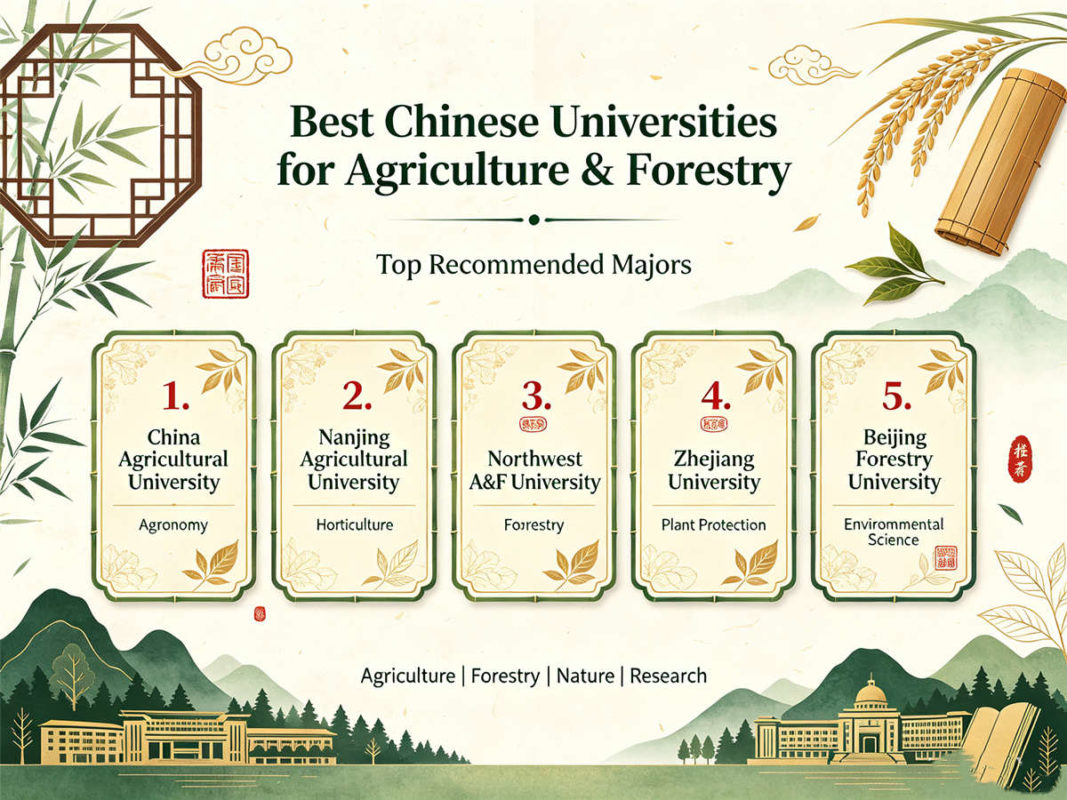
China Agricultural University
China Agricultural University is a leading institution in the field of agriculture in China. It has a comprehensive range of disciplines related to agriculture, including agronomy, animal science, and agricultural engineering. The university is renowned for its high – quality teaching and cutting – edge research. Its faculty members are experts in their respective fields, and they actively participate in national and international research projects. For example, in the field of crop genetics, the university has made significant contributions to the development of high – yielding and disease – resistant crop varieties.
Nanjing Agricultural University
Nanjing Agricultural University is another top – tier institution. It has a long history and a strong academic foundation. The university offers a variety of majors, such as plant protection, horticulture, and agricultural economics. Its research achievements in plant pathology and agricultural resource management are widely recognized. The campus environment is also conducive to learning, with well – equipped laboratories and research facilities. The university also promotes international cooperation, allowing students to gain a global perspective on agriculture and forestry issues.
Beijing Forestry University
Beijing Forestry University stands out in the field of forestry. It focuses on forest science, landscape architecture, and forest engineering. The university has a unique advantage in the study of forest ecosystems and biodiversity conservation. Its research on forest management and ecological restoration has practical applications in protecting China’s forests and natural resources. The university also offers a rich curriculum, including courses on forest botany, forest ecology, and forest planning, which provide students with a solid foundation in forestry – related knowledge.
Top Recommended Majors in Agriculture and Forestry
Agronomy
Agronomy is a fundamental major in agriculture. It involves the study of crop production, soil management, and plant breeding. Students majoring in agronomy learn about different types of crops, their growth requirements, and how to optimize their yields. They also study the latest agricultural technologies, such as precision agriculture, which uses modern sensors and data – analysis techniques to improve farming efficiency. Agronomy graduates can work in agricultural research institutions, seed companies, or government agricultural departments.
Animal Science
Animal science focuses on the breeding, nutrition, and management of livestock and poultry. Students learn about animal physiology, genetics, and husbandry techniques. This major is crucial for ensuring the quality and quantity of animal products, such as meat, milk, and eggs. With the development of the livestock industry in China, there is a high demand for professionals in this field. Animal science graduates can work in livestock farms, feed companies, or veterinary research institutions.
Forestry
Forestry majors study forest ecosystems, forest management, and forest resource utilization. They learn about forest ecology, tree species identification, and forest protection measures. Forestry graduates play an important role in forest conservation, afforestation, and the development of forest – based industries. They can work in forestry bureaus, forestry research institutions, or environmental protection agencies.
Landscape Architecture
Landscape architecture combines art, science, and technology to design and create outdoor spaces. In the context of agriculture and forestry, it involves the planning and design of parks, gardens, and green spaces. Students major in landscape architecture learn about plant selection, site analysis, and design principles. This major is in high demand as cities in China are increasingly emphasizing the construction of ecological and beautiful urban environments. Graduates can work in landscape design companies, urban planning departments, or real – estate development companies.
Benefits of Studying Agriculture and Forestry in Chinese Universities
Studying agriculture and forestry in Chinese universities offers several benefits. Firstly, these universities have a strong academic atmosphere and experienced faculty. The faculty members are not only well – versed in theoretical knowledge but also have rich practical experience, which can provide students with in – depth guidance. Secondly, Chinese universities often have close cooperation with agricultural and forestry enterprises, providing students with internship and employment opportunities. For example, students may have the chance to participate in research projects with leading companies, which can enhance their practical skills and increase their employability. Thirdly, China’s large – scale agricultural and forestry development provides a broad stage for students. They can contribute to solving real – world problems, such as food security and ecological protection, and make a positive impact on society.
Career Prospects for Graduates
Graduates from agriculture and forestry majors in Chinese universities have a wide range of career prospects. In the agricultural sector, they can work in areas such as agricultural production, agricultural technology extension, and agricultural product processing. For example, they can be involved in promoting new agricultural technologies to farmers, improving the quality of agricultural products, or developing new agricultural products. In the forestry field, graduates can engage in forest management, forest resource conservation, and the development of forest – based tourism. They can also work in environmental protection and ecological restoration projects. Additionally, with the development of the digital economy, there are also emerging career opportunities in areas such as agricultural e – commerce and smart forestry.
Challenges and Opportunities in Agriculture and Forestry Education
While there are many opportunities in agriculture and forestry education in China, there are also some challenges. One of the challenges is the need to attract more high – quality students. Some students may have a limited understanding of agriculture and forestry majors, and there may be a perception that these fields are less glamorous compared to other disciplines. To address this, universities need to strengthen their publicity and promotion efforts, highlighting the importance and potential of these majors. Another challenge is to keep up with the rapid development of technology. The agricultural and forestry sectors are increasingly integrating with modern technologies such as artificial intelligence, big data, and the Internet of Things. Universities need to update their curricula and teaching methods to ensure that students are equipped with the latest knowledge and skills. However, these challenges also bring opportunities. The integration of technology provides new ways to solve problems in agriculture and forestry, and students with a combination of traditional knowledge and modern technological skills will have a competitive edge in the job market.
How to Choose the Right University and Major
When choosing a university and major in agriculture and forestry, students should consider several factors. Firstly, they should assess their own interests and aptitudes. If a student is interested in plant research, majors such as agronomy or horticulture may be suitable. If they have a passion for animal – related work, animal science could be a good choice. Secondly, students should look at the reputation and ranking of the universities. Universities with a long – standing history and high – quality research facilities are more likely to provide a better learning environment. Thirdly, they should consider the curriculum and teaching resources of the majors. A well – designed curriculum that combines theory and practice can better prepare students for future careers. Finally, students can also consider the location of the university. Universities in areas with a strong agricultural or forestry industry may provide more practical opportunities and connections.
